
Childhood Trauma in Adults: Signs You Shouldn’t Ignore and How Therapy Helps
Some patients don’t walk into a clinic saying they have trauma.
They say things like, “I don’t know why I react like this,” or “I feel anxious all the time, even when nothing is wrong.”
Over time, as conversations unfold, a deeper pattern often emerges.
What we are really seeing in many of these cases is childhood trauma in adults, not always as a clear memory, but as a pattern of thinking, feeling, and reacting that has quietly carried forward over the years.
Trauma doesn’t always look dramatic. Sometimes it looks like overthinking, difficulty trusting others, emotional shutdown, or a constant need for control. These responses once helped a person cope. But in adulthood, they can start to feel limiting.
This is where an important question begins to take shape: how to heal from childhood trauma in a way that genuinely improves daily life.
Understanding Childhood Trauma
To understand what is childhood trauma, it helps to look beyond definitions and focus on lived experience.
Childhood trauma indicate to the experiences that felt overwhelming, unsafe, or emotionally unsupported during early development. These may include abuse or loss, but they can also involve less visible experiences such as emotional neglect, growing up in a tense environment, or not feeling heard or validated.
These are all recognized types of childhood trauma, and they shape how a child learns to understand safety, relationships, and emotions.
From a clinical perspective, trauma is not just about what happened—it is about what the brain and body learned from it.
This explains how does childhood trauma affect adulthood. When safety is inconsistent in childhood, the nervous system adapts. It may stay alert, guarded, or emotionally withdrawn. These patterns often continue into adulthood, even when the environment is no longer threatening.
Probable Causes of Childhood Trauma in Adults
When understanding childhood trauma in adults, it’s important to recognize that causes are often cumulative rather than tied to a single event. Trauma can arise from both specific incidents and repeated experiences. This can make a child feel unsafe, unsupported, or emotionally overwhelmed.
Common causes include:
- Physical, emotional, or sexual abuse
Emotional neglect or lack of affection and validation
Growing up in a high-conflict or unstable home environment
Parental separation, divorce, or loss of a caregiver
Exposure to domestic violence or substance abuse in the household
Bullying, social rejection, or isolation during formative years
Chronic criticism, unrealistic expectations, or lack of encouragement
Living in unpredictable environments where safety felt inconsistent
Medical trauma or prolonged illness during childhood
Feeling unheard, dismissed, or unsupported emotionally
In many cases, trauma develops not only from what happened, but also from what was missing, such as emotional safety, reassurance, and consistent support. Over time, these experiences shape how individuals respond to stress, relationships, and emotional challenges, which is why their effects often continue into adulthood.
Understanding these causes can help individuals connect past experiences with present patterns and is often an important step in learning how to heal from childhood trauma.


Signs of Childhood Trauma in Adults
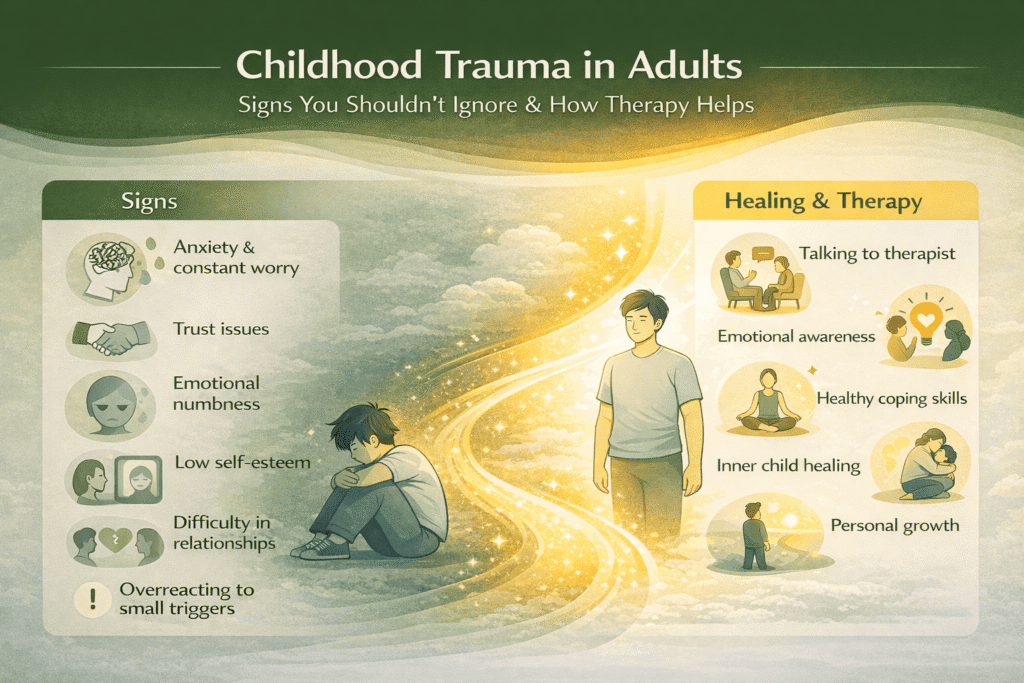
The symptoms of childhood trauma in adulthood are often subtle and can be mistaken for personality traits or stress.
Emotional Signs
Common signs of emotional trauma in adults include:
Emotional numbness or overwhelm
Fear of abandonment
Difficulty trusting others
Behavioral Patterns
You may also notice:
Avoiding conflict or difficult conversations
People-pleasing tendencies
Difficulty setting boundaries
Repeating unhealthy relationship patterns
These are often linked to childhood trauma responses in adults, such as:
Fight (anger, control tendencies)
Flight (avoidance, overworking)
Freeze (shutdown, indecision)
Fawn (seeking approval)
Repressed and Unresolved Trauma
Some individuals go through signs of repressed childhood trauma, where memories are not fully conscious but still affect behavior.
This may include:
Strong emotional reactions without clear triggers
Discomfort in specific situations
Fragmented childhood memories
Over time, this may develop into signs of unresolved childhood trauma in adults, including:
Chronic stress
Control issues from childhood trauma
Difficulty maintaining stable relationships
In certain cases, individuals may also show signs of arrested emotional development in adults, where emotional responses feel out of sync with age or situation.
The Impact of Childhood Trauma on Adults
The effects of childhood trauma in adulthood extend beyond emotions. They influence how the brain and body respond to the world.
Emotional Impact
- Difficulty regulating emotions
- Heightened stress sensitivity
- Feelings of shame or low self-worth
Cognitive Impact
- Negative thinking patterns
- Difficulty focusing
- Constant overthinking
Relationship Impact
- Fear of rejection or abandonment
- Difficulty forming secure attachments
- Emotional withdrawal or dependency
In some cases, trauma may lead to PTSD, childhood trauma, where symptoms include:
- Flashbacks
- Nightmares
- Avoidance behaviors
- Hypervigilance
A frequently asked question is:
Does childhood trauma ever go away?
While the memory may remain, its emotional intensity can significantly reduce with the right treatment for childhood trauma in adults.
How Therapy Helps and What the Healing Process Looks Like?
Healing from trauma is not about erasing the past; it’s about changing your relationship with it.
For individuals dealing with childhood trauma as an adult, therapy provides a structured and safe space to explore experiences, understand patterns, and build healthier coping mechanisms.
At BrainHub Polyclinic, this process is approached with a combination of clinical expertise and compassionate care, focusing on both emotional healing and cognitive resilience.
What Healing Often Looks Like?
- Recognizing triggers and emotional patterns
- Understanding how past experiences influence current behavior
- Learning practical tools for how to cope with trauma
- Building emotional stability and self-awareness
Healing is gradual. There may be moments of progress and moments of difficulty—but over time, individuals often feel more in control of their thoughts and emotions.
Therapies to Heal Trauma
A personalized treatment plan for childhood trauma in adults typically includes a combination of therapies. Each approach works differently, and often they are integrated based on individual needs.
1. Cognitive Behavioral Therapy (CBT)
CBT focuses on identifying and changing unhelpful thought patterns.
How it helps:
- Breaks the cycle of negative thinking
- Helps reframe beliefs formed during childhood
- Improves emotional regulation
For example, someone who developed self-doubt due to early criticism may learn to challenge and replace those thoughts with more balanced perspectives.
2. Trauma-Focused Cognitive Behavioral Therapy (TF-CBT)
This is a specialized form of CBT designed specifically for trauma.
How it helps:
- Gradually processes traumatic memories in a safe way
- Reduces emotional intensity associated with past events
- Builds coping skills for distressing thoughts
This approach is particularly useful for individuals experiencing symptoms of childhood trauma in adulthood linked to specific events.
3. EMDR (Eye Movement Desensitization and Reprocessing)
EMDR is widely used in treating PTSD childhood trauma.
How it helps:
- Helps the brain reprocess traumatic memories
- Reduces the emotional charge of painful experiences
- Allows memories to feel less overwhelming over time
Many patients report that memories feel more “distant” and less distressing after EMDR sessions.
4. Psychodynamic Therapy
This therapy explores how early experiences shape current thoughts and behaviors.
How it helps:
- Increases self-awareness
- Identifies unconscious patterns
- Improves relationship dynamics
It is especially helpful for individuals experiencing signs of unresolved childhood trauma in adults or recurring emotional patterns.
5. Somatic and Mind-Body Approaches
Trauma is not just stored in the mind; it is also held in the body.
How it helps:
- Releases physical tension linked to trauma
- Improves nervous system regulation
- Enhances mind-body connection
This is particularly useful for those experiencing physical symptoms related to stress.
6. Integrated Trauma Care
At a clinic like BrainHub, therapy may combine multiple approaches to address:
- Emotional patterns
- Cognitive responses
- Behavioral habits
This integrated method supports long-term healing rather than short-term symptom relief.
Why Choose BrainHub Polyclinic for Childhood Trauma Care?
Childhood trauma in adults often shows up as patterns rather than clear memories, patterns that once helped you cope but may no longer support your wellbeing.
The important thing to understand is that these patterns are not permanent. With the right support, structured treatment for childhood trauma in adults, and a deeper understanding of how to cope with trauma, it is possible to gradually change how you respond, feel, and relate to others.
Healing from childhood trauma is not about erasing the past, but about reducing its hold on your present and building healthier ways to move forward.
At BrainHub Polyclinic, this process is approached with a focus on individualized care, combining evidence-based therapies with a compassionate and human-centered perspective. By addressing both the emotional and neurological aspects of trauma, the aim is to support long-term, meaningful change rather than short-term relief.
If you recognize the signs of unresolved childhood trauma in adults or are exploring how to heal from childhood trauma, seeking guidance from a qualified mental health professional can be an important step toward improved emotional well-being.
Faqs
They often include anxiety, emotional instability, difficulty trusting others, and challenges in relationships. Some individuals may also experience physical symptoms such as fatigue or sleep disturbances. These patterns develop as long-term responses to early stress.
It affects how individuals process emotions, respond to stress, and form relationships. The brain may remain in a protective mode, leading to heightened reactions or avoidance behaviors.
These include fight, flight, freeze, and fawn responses. They are automatic survival strategies that may continue into adulthood even when they are no longer necessary.
Yes, control issues from childhood trauma often develop as a way to create predictability and reduce anxiety in uncertain situations.
These include emotional numbness, mood swings, difficulty expressing feelings, and sensitivity to stress. These signs may not always be constant, but can appear during triggers.
They may include emotional reactions without clear causes, discomfort in certain environments, and difficulty recalling early experiences.
The emotional impact can reduce significantly with therapy. Many individuals reach a stage where past experiences no longer control their daily responses.
Effective strategies include grounding techniques, breathing exercises, structured routines, and developing awareness of triggers.
A combination of therapies tailored to the individual is usually most effective. This may include CBT, EMDR, and other approaches.
Healing involves understanding past experiences, processing emotions, and gradually developing healthier coping patterns.
These include difficulty handling emotions, reacting strongly to minor situations, and struggling with independence or conflict.
Yes, especially when trauma is severe or prolonged. It may require structured and specialized treatment.
It typically includes regular therapy sessions, coping strategies, emotional skill-building, and ongoing evaluation.