
7 Lifestyle Changes to Help With ADHD Treatment
Feeling stuck, distracted, or overwhelmed? Ever found yourself rereading the same sentence five times, only to realize you still don’t remember what it said? Or starting multiple tasks but finishing none?
For people living with ADHD, this isn’t occasional; it’s daily life.
And for those navigating ADHD in adult women, the experience can feel even more confusing. Symptoms often show up as chronic overwhelm, emotional exhaustion, or difficulty staying organized rather than the hyperactivity people typically associate with ADHD.
How to reduce ADHD symptoms? While medication and therapy remain the core treatment strategies, ADHD lifestyle changes show a dramatic improvement in how you feel, think, and function in your daily life.
DID YOU KNOW? According to the American Psychiatric Association, ADHD affects approximately 8.4% of children and 2.5% of adults worldwide, and particularly ADHD in adult women, is increasingly being recognized as significantly underdiagnosed |
What causes ADHD in the brain?
ADHD is rooted in a neurological difference, not just the lack of intelligence or willpower. According to research, people with ADHD have differences in their prefrontal cortex (the region that is responsible for executive function, impulse control, and sustained attention).
There are also chemical imbalances involved: the brain’s dopamine and norepinephrine systems don’t function as they do in typical individuals.
So, what causes ADHD in adults specifically?
- In many cases, its genetics
- Environmental factors
- Premature birth
- Prenatal exposure to certain substances
- Brain injuries
Understanding what causes ADHD in the brain helps change the lifestyle by supporting healthy dopamine function and improving neural communication.
Can you get rid of ADHD?
The honest answer is: not entirely.
ADHD is a lifelong neurodevelopmental condition. However, with the right treatment approach and consistent ADHD lifestyle changes, symptoms can be managed so effectively that they have far less impact on your daily life.
The goal is not to “cure” ADHD but to learn how to live with ADHD in a way that lets you thrive.

7 lifestyle changes to help with ADHD treatment
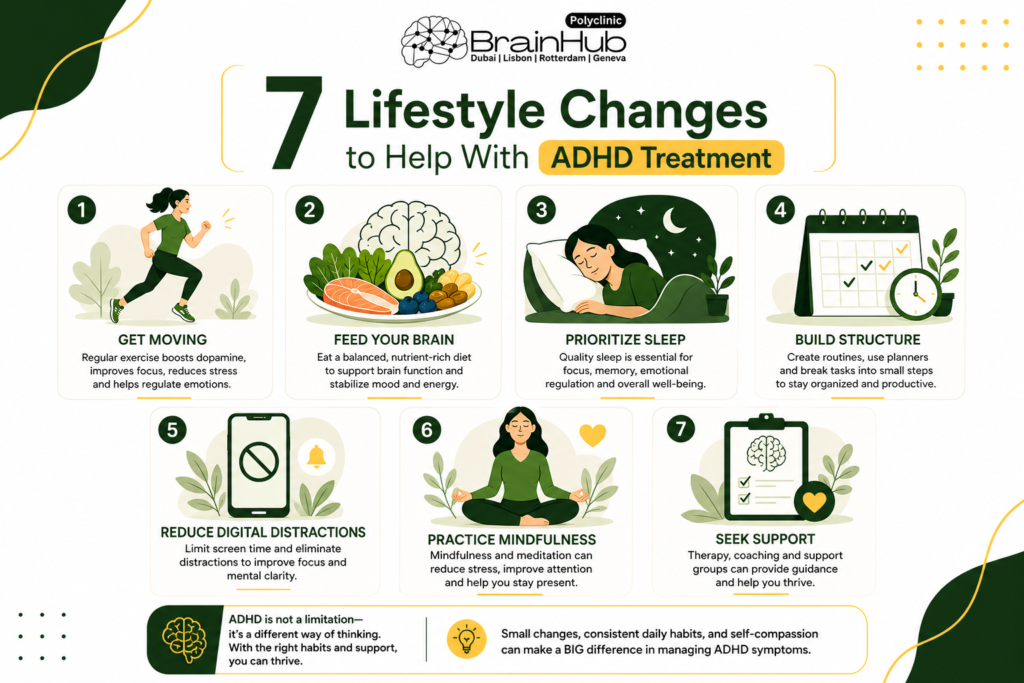
Get moving – Regular exercise is one of the most powerful ways to improve ADHD
Physical activity is one of the most effective and natural ways to help with ADHD because it directly stimulates the release of dopamine and norepinephrine.
Exercise is a “free dose” of focus-enhancing neurochemicals.
Regular exercise reduces ADHD symptoms, including hyperactivity, inattention, and impulsivity.
For ADHD in adult women, studies suggest that aerobic exercises can significantly reduce emotional dysregulation.
How to improve ADHD – Try these exercises
- Aim for 30 minutes of aerobic activity – running, cycling, and swimming
- Try high-intensity interval training (HIIT) for a quick dopamine boost
- Yoga and martial arts – they combine physical movement with mindfulness and structure
- Even a 10-minute brisk walk before a meeting or study session can sharpen focus noticeably
Feed your brain – Nutrition matters more than most people realize
What you eat directly affects how your brain functions. Processed foods, artificial additives, and refined sugar increase hyperactivity and difficulty in concentration.
On the other hand, a well-balanced, nutrient-rich diet supports stable blood sugar, reduces inflammation, and promotes healthy neurotransmitter activity.
What to include | What to limit |
Fatty fish (salmon, sardines, mackerel) for omega-3s* Lean proteins to support dopamine synthesis Complex carbohydrates (oats, sweet potatoes, whole grains) for sustained energy Fresh fruits and vegetables rich in antioxidants | Sugary snacks and drinks that cause blood sugar spikes and crashes Artificial food colorings and preservatives, which some research links to hyperactivity Excessive caffeine can worsen anxiety and disrupt sleep in sensitive individuals |
* Omega-3 fatty acids have shown promising results in multiple studies for improving attention and reducing impulsivity in people with ADHD. |
Prioritize sleep – It’s not a luxury, it’s a necessity to reduce ADHD symptoms
Sleep issues are incredibly common and often worsen symptoms linked to what causes ADHD in adults, including poor focus, irritability, and impulsivity.
Signs your sleep is affecting your ADHD:
- You feel mentally foggy during the day
- Your focus drops drastically in the afternoon
- You struggle to “switch off” at night
Sleep hygiene habits that actually help
- Set a consistent bedtime and wake time, even on weekends
- Power down screens at least an hour before bed (blue light delays melatonin release)
- Keep your bedroom cool, dark, and quiet
- Avoid large meals or stimulating activities in the two hours before bedtime
- Consider a calming wind-down routine: warm shower, light reading, or gentle stretching
Build structure into your day – Organization is a learnable skill
If you’re constantly waiting to “feel ready” to start something, ADHD will keep you stuck.
That’s because ADHD affects the brain’s ability to initiate tasks – something directly tied to what causes ADHD in the brain.
What helps instead: Structure.
Try these steps for a structured routine
- Plan your day the night before
- Use time blocks instead of vague to-do lists
- Break tasks into 10–15 minute chunks
- Set alarms for transitions
If you’ve been wondering how to improve ADHD, this is one of the most effective starting points. Structure reduces overwhelm and gives your brain clear direction.
Reduce digital overload – Manage screens and distractions
In this hyper-connected world, for someone with ADHD, constant notifications, social media feeds, and digital multitasking can feel overwhelming.
Digital discipline is not about avoiding technology; it’s about using it intentionally rather than reactively.
Practical strategies for digital wellness
- Use apps like Freedom or Cold Turkey to block distracting websites during focused work periods
- Turn off all non-essential notifications on your phone
- Create “phone-free zones”, the dinner table, the bedroom, and work blocks
- Set a daily screen time limit for social media and stick to it
- Try the “one screen at a time” rule – no TV while scrolling on your phone
Reducing digital noise is the underrated ADHD lifestyle change, but implementing these strategies ensure noticeable improvements in ADHD.
Calm the noise: Practice mindfulness
ADHD isn’t just about distraction, it’s also about mental noise. Racing thoughts, overthinking, and emotional reactivity are common, especially in ADHD in adult women.
Having a relaxed mind improves attention, emotional control, and reduces impulsive reactions.
Start small with these strategies:
- Ensure 5 minutes of deep breathing
- Follow guided meditation apps
- Writing down thoughts before bed
If you’re learning how to live with ADHD, mindfulness creates space between your thoughts and your actions.
Don’t do it alone – BrainHub support is powerful to help with ADHD
ADHD is not a solo journey; you need the right support, meaningful connections, and a strong community that makes a real difference.
At BrainHub UAE, treatment goes beyond surface-level solutions. Their approach includes:
- In-depth assessments to understand what causes ADHD in the brain
- Psychotherapy and EMDR sessions for adults with ADHD who are managing co-occurring anxiety, emotional dysregulation, or past trauma.
- Personalized therapy plans
- Cognitive behavioral therapy (CBT)
- Advanced neuro-based interventions
If you’re serious about finding long-term help with ADHD, expert guidance makes all the difference.
ADHD in adult women: The hidden struggleFor a long time, people thought ADHD only happened to young, hyperactive boys. As a result, many women were overlooked. Why is it different for women? Instead of being physically hyperactive, ADHD in adult women often shows up as:
At Brainhub UAE, we understand that high-achieving women often hide their ADHD well, but they shouldn’t have to struggle in silence. We help you find a way to manage the chaos so you can finally feel at peace. |
Take control of your brain health with Dubai’s most advanced ADHD specialists.
Living with ADHD is a personal journey, and small, consistent changes can make a meaningful difference. These ADHD lifestyle changes, from better routines to improved sleep and focus, work best when combined with expert care.
At BrainHub UAE, advanced diagnostics and personalized therapies provide effective, science-backed help with ADHD.