
Navigating Relationship Challenges: How Couples Therapy Can Strengthen Your Bond
All relationships, even the strongest ones, go through tough times.
Miscommunication, unmet expectations, life transitions, and emotional distance can quietly grow into deeper relationship challenges over time.
When conversations turn into conflicts or silence replaces connection, many couples begin to wonder: Is this just a phase or do we need help?
Couples therapy offers a structured, supportive space to understand what’s happening beneath the surface. Rather than focusing on blame, it focuses on insight, healing, and growth.
If you’ve ever asked yourself, does couples therapy work, the answer lies in how intentionally and collaboratively you’re willing to approach change.
With the right guidance, couples marriage counseling can become a powerful turning point, transforming conflict into clarity and disconnection into deeper intimacy.
Understanding relationship challenges in modern life
Couples today deal with many pressures. Busy jobs, raising children, money worries, and cultural expectations can make relationships harder. Even couples who care about each other can have problems like these:
- Misunderstanding each other often
- Pulling away emotionally or avoiding tough topics
- Arguing about the same things again and again
- Worrying about intimacy
- Having trouble trusting each other
- Finding it hard to handle big life changes together
Often, these challenges are not about a single event. They reflect patterns, ways of communicating, reacting, or coping that developed over time. Couples marriage counseling helps identify these patterns and replace them with healthier dynamics.
Does couples therapy work? Here’s what the evidence and experience show
A common question couples ask before seeking support is: Does couples therapy work?
Research in relationship psychology consistently shows that evidence-based therapy approaches can significantly improve relationship satisfaction, communication, and emotional connection.
However, outcomes depend on several factors, including commitment, openness, and the therapeutic approach used.
When both partners are willing to engage honestly and take responsibility for growth, it can be transformative. Therapy creates a safe, structured environment where both voices are heard and validated.
Rather than “fixing” one partner, therapy focuses on repairing the system the relationship itself.
Related Blogs
Panic Attack vs Anxiety Attack: What’s the Difference? Feeling overwhelmed,...Read More
Dementia Care Tips: How to Care for a Parent with...Read More
Navigating Relationship Challenges: How Couples Therapy Can Strengthen Your Bond...Read More
Autism Tantrum vs Meltdown: What’s the Difference? Autism meltdown vs...Read More
How does couples therapy work? A look inside the process
Understanding how does couples therapy work can ease uncertainty and reduce hesitation.
At its core, couples therapy is guided dialogue with purpose. A trained therapist facilitates conversations to uncover emotional triggers, unmet needs, and communication breakdowns.
Here’s what happens:
Assessment and goal setting
The therapist learns about your history, strengths, and recurring relationship challenges. Together, you define goals whether that’s improving communication, rebuilding trust, or strengthening intimacy.
Identifying patterns
Many couples are often surprised to learn that their arguments tend to repeat in certain patterns. In therapy, you can spot these patterns and understand the emotional needs behind them.
Skill building
Marriage counseling gives couples useful tools to help them work together, such as:
- Active listening techniques
- Conflict de-escalation strategies
- Emotional regulation skills
- Healthy boundary setting
- Repair attempts after disagreements
Rebuilding emotional safety
Trust and vulnerability are essential for connection. Therapy focuses on restoring emotional safety so partners can express fears, needs, and hopes without fear of judgment.
If you’ve wondered how does couples therapy work beyond conversation, the answer lies in structured exercises, guided reflection, and neuroscience-informed techniques that promote healthier emotional responses.
The benefits of couples therapy: Beyond conflict resolution
The benefits of couples therapy extend far beyond solving arguments. Many couples enter therapy during a crisis but stay because they experience deeper transformation.
Key benefits of couples therapy include:
- Improved communication and clarity
- Greater emotional intimacy
- Healthier conflict management
- Renewed sense of partnership
- Stronger trust and accountability
- Enhanced empathy and understanding
One often overlooked benefit of couples therapy is self-awareness. Partners begin to understand not only each other, but themselves, their attachment styles, triggers, and emotional patterns.
Over time, couples marriage counseling doesn’t just resolve problems. It strengthens resilience, allowing couples to navigate future relationship challenges with confidence.
When should you consider couples marriage counseling?
Many couples wait until problems feel overwhelming. However, therapy can be beneficial at any stage of a relationship.
Consider couples marriage counseling if:
- Arguments feel repetitive and unresolved
- Communication frequently escalates into defensiveness
- Emotional or physical intimacy has declined
- Major life changes are creating tension
- Trust has been compromised
- You feel more like roommates than partners
Seeking help early can prevent small cracks from becoming deep divides. Asking “does couples therapy work” is often the first step toward proactive growth rather than reactive repair.
Addressing common concerns about couples therapy
“Is therapy only for relationships in crisis?”
No. Many couples use therapy for enrichment and growth. The benefits of couples therapy include strengthening already stable relationships.
“Will the therapist take sides?”
A trained therapist maintains neutrality. The goal is not to determine who is right, but to understand how both partners contribute to recurring relationship challenges.
“What if my partner is hesitant?”
It’s common for one partner to feel unsure. Learning how does couples therapy work and discussing shared goals can reduce resistance.
“Does couples therapy work if we’ve been struggling for years?”
Long-standing patterns can be reshaped. While progress may take a while, consistent effort and professional guidance often lead to meaningful change.
The neuroscience of connection
Healthy relationships are deeply connected to brain function. Emotional bonding activates neural pathways linked to safety and reward. Chronic conflict, on the other hand, can trigger stress responses that impair communication.
At Inclusive BrainHub, an advanced understanding of neuroscience informs therapeutic care. By integrating evidence-based therapies with insights into brain functioning, therapy becomes more precise and personalized.
Rather than simply managing surface-level behaviors, the focus is on decoding emotional responses and strengthening resilience at a neurological level an approach that enhances the long-term benefits of couples therapy.
What makes professional couples therapy effective?
Efficient couples counseling is organized, based on research, and adapted to each couple. It often includes:
- Emotionally Focused Therapy (EFT)
- Cognitive Behavioral techniques
- Attachment-based interventions
- Mindfulness practices
- Communication training exercises
When couples wonder if therapy works, the results often depend on the quality of care. Using proven methods, along with compassion and skill, can make a big difference.
At Inclusive BrainHub, we combine careful assessment with a caring approach. By learning about each partner’s unique needs, our therapists create a plan that helps couples heal together.
Rebuilding trust after conflict or betrayal
Repairing trust is one of the hardest challenges in a relationship. Therapy offers clear steps to help couples feel safe again:
- Acknowledging hurt and responsibility
- Processing emotions openly
- Creating accountability agreements
- Re-establishing transparency
- Rebuilding emotional intimacy
Couples marriage counseling does not erase the past but it helps partners decide how they want to move forward.
The benefits of couples therapy in these situations often include renewed clarity and stronger emotional foundations.
Strengthening your bond for the future
Relationships are not static. They evolve as individuals grow. Couples who learn how does couples therapy work often discover that therapy is not about “fixing” problems, it’s about building skills that last a lifetime.
The tools gained through therapy empower couples to:
- Navigate disagreements constructively
- Express vulnerability without fear
- Maintain connection during stress
- Align shared values and long-term goals
Rather than avoiding relationship challenges, couples develop the resilience to face them together.
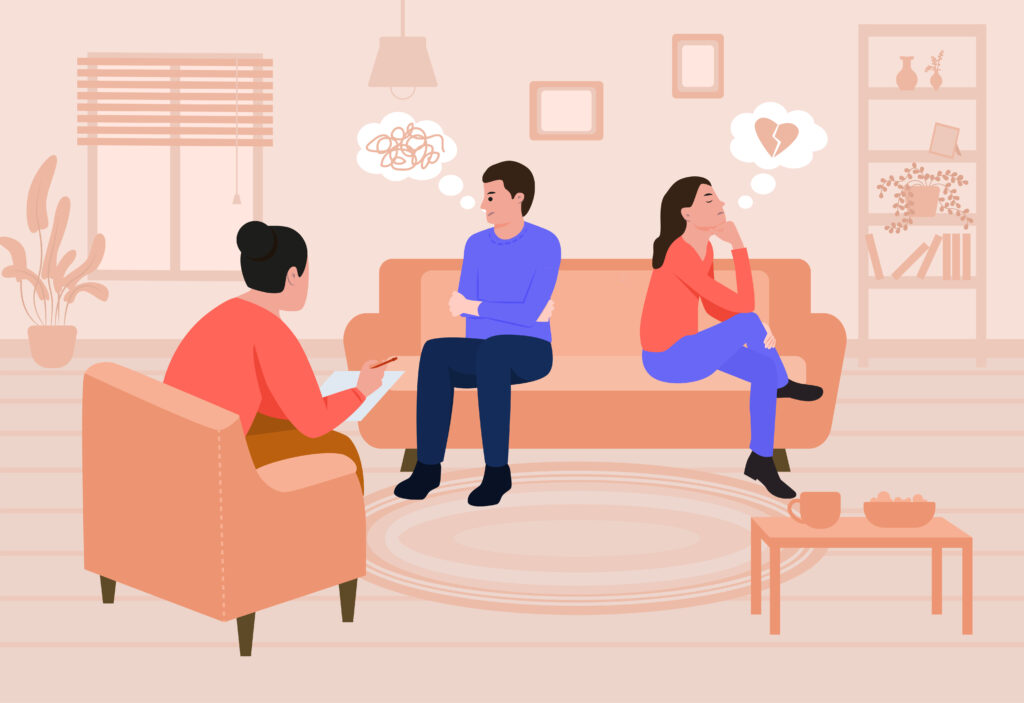
Where neuroscience meets compassion: Couples therapy at BrainHub
At Inclusive BrainHub, couples therapy is grounded in advanced neurotechnology and evidence-based methodologies. The clinic’s team of neurologists, psychologists, and therapists integrates scientific precision with empathetic care.
Through comprehensive assessments and personalized treatment plans, couples marriage counseling is tailored to each partnership’s unique dynamics. By decoding the brain’s patterns and emotional responses, therapists design targeted interventions that maximize the benefits of couples therapy.
If you’re still asking, does couples therapy work?
Consider this: when guided by expertise, supported by neuroscience, and embraced with openness, meaningful change becomes possible.
Trust BrainHub for expert couples therapy care
Personalized, neuroscience-informed couples marriage counseling designed to transform relationship challenges into lasting resilience.
Take the first step toward reconnection and clarity book your appointment at BrainHub today and rediscover the strength of your bond.
Faqs
Yes, we have multilingual therapists to support different language needs.
It depends on the condition and goals. Some see progress in weeks; others may need ongoing support.
No. You can book directly with us.
In some cases, yes – please ask during your consultation.