
Panic Attack vs Anxiety Attack: What’s the Difference?
Feeling overwhelmed, restless, or suddenly panicked can be frightening, especially when you’re unsure what’s happening to your body. Many people often use the terms panic attack and anxiety attack as if they mean the same thing, but they actually describe different experiences. There are important differences between the two. Understanding panic attack vs anxiety attack can help you recognize symptoms early and seek the right support.
At BrainHub Polyclinic, our mental health team helps people understand anxiety-related conditions and find ways to recover.
Understanding Panic Attack vs Anxiety Attack
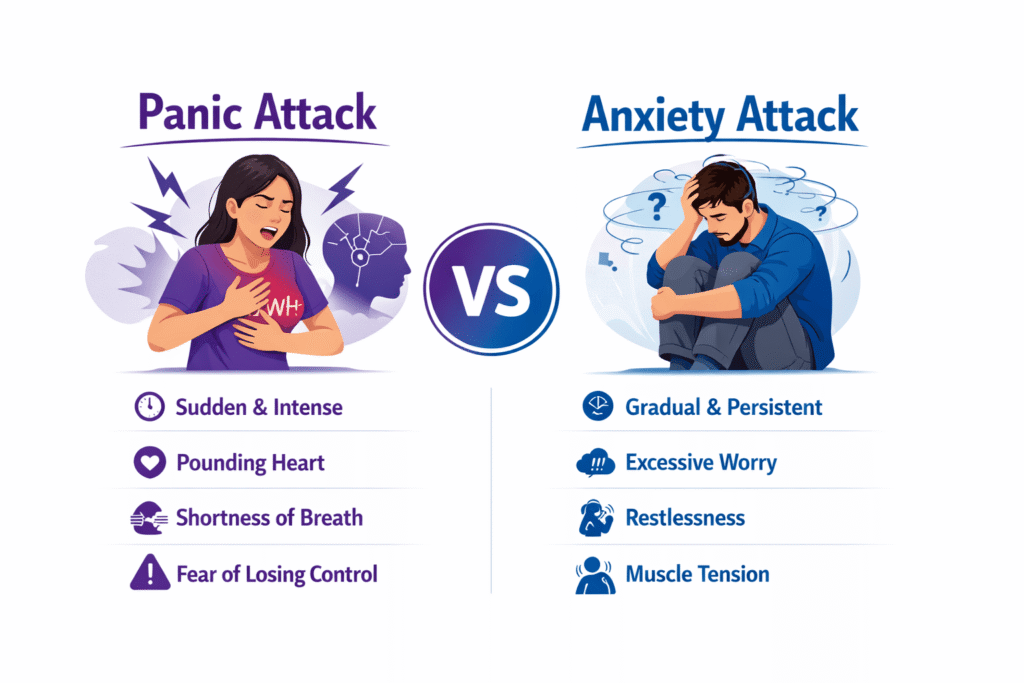
Understanding how a panic attack differs from an anxiety attack is based on the onset and severity of symptoms, which is how quickly the symptoms start and how strong they feel.
A panic attack occurs as a sudden burst of strong fear or anxiety that can happen without warning. It usually reaches its peak within minutes and can feel overwhelming or even life-threatening, whereas an anxiety attack usually builds up slowly. It often starts because of ongoing stress, worry, or specific situations such as work pressure, exams, or personal issues.
Panic attacks are officially recognized in diagnoses like panic disorder. Anxiety attacks, while not an official medical term, are commonly used to describe times of intense anxiety.
Symptoms of an Anxiety Attack
Many people ask, what does an anxiety attack feel like? The experience can vary from person to person, but it usually builds up over time.
Anxiety attacks often happen when stress adds up. For example, someone facing a big decision or a tough situation might notice their anxiety slowly getting stronger until it feels overwhelming.
People experiencing anxiety attacks may feel:
- Persistent worry or fear
- Restlessness or feeling “on edge”
- Difficulty concentrating
- Increased heart rate
- Muscle tension
- Trouble sleeping
- Irritability
Unlike panic attacks, anxiety attacks can last longer and may come and go in intensity during the day. Noticing the signs of an anxiety attack early can help stop symptoms from getting worse.
Symptoms of a Panic Attack
The symptoms of a panic attack usually arise without warning and are highly intense. A person may feel fine one moment and then suddenly experience extreme fear or physical discomfort.
Common symptoms include:
- Rapid or pounding heartbeat
- Shortness of breath or difficulty breathing
- Chest pain or tightness
- Sweating
- Trembling or shaking
- Dizziness or lightheadedness
- Nausea or stomach discomfort
- Feeling detached from reality
- Fear of losing control or dying
These symptoms usually reach their peak within 10 to 20 minutes, but they can feel much longer to the person going through them. Because panic attack symptoms can look like heart problems, many people go to the emergency room at first.
Panic Attack Vs Anxiety Attack
Aspect | Anxiety Attack | Panic Attack |
Definition | A gradual increase in intense worry or fear is usually linked to a stressor. | A sudden episode of intense fear that may occur without a clear trigger. |
Onset | Develops slowly and builds over time. | Starts suddenly and peaks within minutes. |
Triggers | Usually related to stress, worries, or specific situations. | Can occur unexpectedly, even without an obvious cause. |
Intensity | Symptoms are uncomfortable but generally less intense. | Symptoms are severe and can feel overwhelming or life-threatening. |
Duration | Can last for hours or even days, depending on the situation. | Typically lasts 10–20 minutes, though some symptoms may linger longer. |
Common Symptoms | Restlessness, excessive worry, irritability, muscle tension, fatigue, difficulty concentrating. | Rapid heartbeat, shortness of breath, chest pain, dizziness, sweating, shaking, fear of losing control. |
Sleep Impact | Anxiety may make it hard to fall or stay asleep. | In some cases, you can have a panic attack in your sleep (nocturnal panic attack). |
Recognition | Often described through the signs of an anxiety attack and ongoing stress symptoms. | Identified by sudden symptoms of a panic attack, such as intense fear and physical reactions. |
Management | Can improve with stress management, therapy, and learning how to calm anxiety attack episodes. | May require immediate calming techniques and professional treatment if frequent. |
Can you have a Panic Attack in your sleep?
Many people are surprised to learn that you can have a panic attack in your sleep. These are known as nocturnal panic attacks. A person may suddenly wake up feeling intense fear along with physical symptoms such as:
- Rapid heartbeat
- Shortness of breath
- Sweating
- Shaking or chills
- A sense of impending danger
These episodes can be very upsetting and may make it hard to fall back asleep because of the fear of another attack. Nocturnal panic attacks are often connected to panic disorder or severe anxiety and may need a professional evaluation.
Treatment and medication for Panic Attack vs Anxiety Attack
Understanding panic attack vs anxiety attacks is important for choosing the right treatment. Professionals in mental health typically advise a mix of therapy, lifestyle changes, and medication to manage symptoms such as the signs of an anxiety attack or the symptoms of a panic attack. These approaches can also help individuals learn how to calm anxiety attack episodes and how to stop an anxiety attack more effectively.
Counseling and psychotherapy
Therapy is often the first step in treating anxiety-related conditions. It helps people understand what does an anxiety attack feels like, spot triggers, and build coping skills.
Common therapies include:
- Cognitive Behavioral Therapy (CBT): Helps identify negative thought patterns and substitute them with more constructive ways of coping with stress.
- Cognitive Therapy: Focuses on recognizing and reframing unhelpful thoughts linked to anxiety.
- Exposure Therapy: Gradually introduces anxiety-triggering situations in a safe environment to reduce fear over time.
- Relaxation techniques: Deep breathing, guided imagery, progressive muscle relaxation, and biofeedback can help manage anxiety and panic symptoms.
These techniques are helpful tools for learning how to calm anxiety attack symptoms when they occur.
Medication
In certain cases, physicians prescribe medication to help manage symptoms. Common options include:
- Antidepressants (SSRIs and SNRIs): Often used for long-term treatment to regulate mood and anxiety.
- Beta-blockers help control physical symptoms such as a rapid heart rate.
- Anti-anxiety medications: Benzodiazepines may provide quick relief during severe episodes but are usually prescribed for short-term use due to the risk of dependence.
Medications can have side effects and should always be taken with a doctor’s guidance. Antidepressants usually take a few weeks to work, while benzodiazepines are used only for short periods. With the right treatment, therapy, and lifestyle changes, people can manage anxiety and panic attacks and improve their mental well-being.
Industrial-Organizational Psychology: Psychology at Work
Commonly known as I/O psychology, this branch applies psychological principles and research methods to the workplace. The goal is to improve productivity, shape a healthy organizational culture, and enhance the well-being and satisfaction of employees.
- Core Focus: I/O psychologists are involved in employee selection and assessment, designing training programs, developing leadership qualities, improving workplace morale, structuring organizations effectively, and ensuring ergonomic and efficient work environments.
- The “I” and the “O”: The “Industrial” side focuses on matching individuals to jobs and optimizing human resources. The “Organizational” side focuses on understanding how organizations affect individual behavior, focusing on culture, leadership, and motivation.
When to seek professional help?
It’s normal to feel anxious from time to time. But if you have frequent panic attacks or ongoing anxiety that gets in the way of daily life, it could be a sign of an anxiety disorder.
You should consider seeking help if:
- Panic or anxiety attacks occur regularly.
- Symptoms interfere with work or relationships.
- Fear of another attack changes your behavior.
- Sleep disturbances or nocturnal panic attacks occur frequently.
Getting help early can make a big difference in your quality of life.
Why choose BrainHub Polyclinic for your mental health
Understanding panic attack vs anxiety attacks is the first step toward better mental health. While both conditions can feel overwhelming, they are manageable with the right support and treatment.
At BrainHub Polyclinic, our experienced mental health professionals offer personalized care to help people manage anxiety, panic attacks, and related issues. With proven therapies, stress-management tools, and caring support, patients can take back control of their mental health.
If you or someone you know often has panic or anxiety attacks, getting professional help can make a real difference in finding long-term balance and recovery.