
Dementia Care Tips: How to Care for a Parent with Dementia at Home
Caring for a loved one with dementia is deeply meaningful and emotionally overwhelming. As memory, behavior, and communication gradually change, families often find themselves searching for the right ways to provide comfort, safety, and dignity while living with dementia alongside their loved one.
Caregivers may face many questions, such as how to deal with a parent with early dementia or what to do when a parent has dementia, including how to respond to confusion, manage daily routines, or support their loved one through difficult moments. Understanding the condition and learning practical caregiving strategies can make a great difference in the daily lives of both patients and their families.
At BrainHub Polyclinic, experienced specialists provide comprehensive evaluation, guidance, and treatment for early signs of dementia in women. We also support caregivers with the knowledge and resources they need for effective dementia care and Alzheimer’s care, helping them navigate this journey with confidence and compassion.
What is Dementia?
Dementia is not just one disease. It is a group of symptoms that affect memory, thinking, and daily activities. The most common causes are Alzheimer’s disease, vascular dementia, and Lewy body dementia.
Dementia affects millions of people worldwide. According to the World Health Organization (WHO), more than 55 million people are living with dementia globally. Around 10 million new cases are diagnosed every year. Because of its progressive nature, the role of caregivers becomes increasingly important as the condition advances and requires structured care for dementia patients.
People living with dementia may experience:
Memory loss
Confusion about time or place
Difficulty communicating
Mood changes
Personality shifts
Difficulty completing routine activities
With dementia, tasks that once seemed simple, such as dressing, cooking, or remembering appointments, can become overwhelming.
This is why families and caregivers play a crucial role in maintaining dignity, safety, and emotional comfort while helping someone with cognitive impairment manage daily life.
Early signs of Dementia in women
Fact Check |
Some early signs of dementia in women may include:
- Memory lapses that affect daily life
Forgetting recent conversations, appointments, or events more frequently. - Difficulty organizing or planning
Trouble following a familiar recipe, managing finances, or completing routine tasks. - Mood or personality fluctuation
Changes in mood or personality, e.g., heightened irritability, anxiety, or social disengagement. - Confusion about time or place
Losing track of dates, seasons, or familiar locations. - Struggling with communication
Difficulty finding the right words or repeating the same questions.
Early evaluation by a specialist can help confirm the cause and allow families to plan proper care strategies.
Related Blogs



How to prevent Dementia: Lifestyle habits that support brain health
While not all types of dementia can be prevented, many people ask how to prevent dementia or delay its progression.
Did you know? Up to 40% of dementia cases may be linked to lifestyle factors.
Helpful habits include:
Staying physically active
Maintaining social connections
Having a brain-friendly diet
Keeping the brain active
Managing chronic conditions
These steps are essential not only for prevention but also for Alzheimer’s disease self-care and long-term brain health.
Stages of Dementia and What to Expect
Understanding the stages of dementia helps families prepare for changes over time.
Early Stage
Mild memory loss
Difficulty finding words
Middle Stage
Increased confusion
Behavioral changes
Need for daily assistance
Late Stage
Severe cognitive decline
Loss of communication ability
Full-time care required
Understanding dementia symptoms progression allows better planning and care.
How to Care for a Parent with Dementia at Home (Step-by-Step Guide)
Providing care for dementia patients at home requires structure, patience, and adaptability.
If you are wondering how to deal with a parent with early dementia, follow these essential steps:
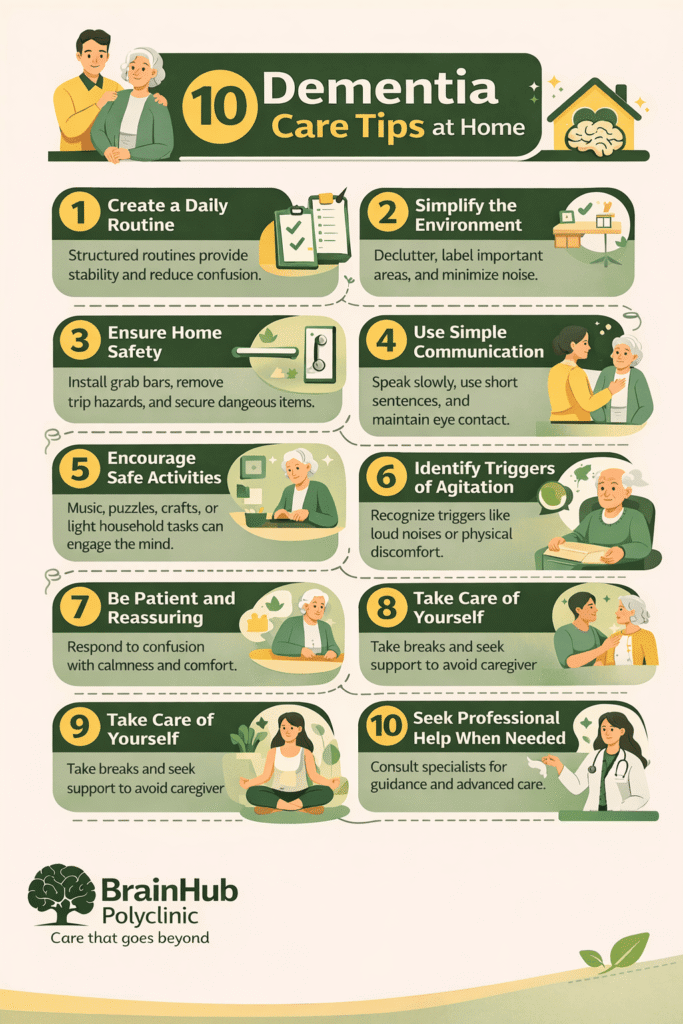
Create a Structured Routine – A predictable daily routine reduces confusion and anxiety.
Simplify the Environment-Declutter spaces and label important areas to support independence.
Ensure Home Safety –Install grab bars, remove loose rugs, and secure hazardous items.
Encourage Independence- Allow simple tasks to maintain confidence and dignity.
Practice Calm Communication –Use simple sentences and maintain eye contact when speaking.
These dementia caregiver tips are essential for managing daily life while living with dementia.
Activities for Dementia patients at home
Engaging activities can help stimulate the brain, reduce anxiety, and improve mood. Simple, enjoyable tasks often work best.
Here are some activities for dementia patients at home:
- Music therapy – Listening to familiar songs can trigger positive memories and emotional comfort.
- Art and crafts – Painting, drawing, or simple craft activities encourage creativity and relaxation.
- Memory games – Matching games, puzzles, or photo albums help stimulate cognitive skills.
- Light household tasks – Folding laundry or watering plants can provide a sense of purpose.
- Gentle exercise – Short walks, stretching, or chair exercises improve physical and mental well-being.
The key is to choose activities that match the person’s abilities and interests. These activities are an important part of dementia care and help support individuals living with dementia.
What to do with a violent Dementia patient?
Families often struggle with what to do with a violent dementia patient, especially during advanced stages.
Aggression is usually caused by confusion, fear, or discomfort.
Caregivers should:
Stay calm and avoid confrontation
Identify triggers
Give space
Redirect attention
Seek medical help
Knowing how to help someone with cognitive impairment during such episodes is a key part of dementia care and Alzheimer’s care.
Tips for taking care of Dementia patients
Providing consistent and compassionate support is essential when caring for someone with dementia.
Helpful caregiver tips include:
- Maintaining patience and empathy at all times
- Break tasks into small, manageable steps
- Encourage healthy meals and hydration
- Ensure regular medical checkups
- Take breaks and seek caregiver support when needed
Caregivers often experience emotional and physical fatigue.
What do studies reveal? |
Caring for yourself is just as important as caring for your loved ones.
When professional support becomes important
As dementia progresses, professional help becomes necessary. This is especially important when caring for parent with dementia at home becomes overwhelming.
Support may include:
Cognitive assessments
Medication management
Behavioral therapy
Memory support
Caregiver counseling
Professional support improves dementia care outcomes and helps families better manage life with a parent with dementia.
What therapies does BrainHub offer to manage Dementia?
At BrainHub Polyclinic, dementia care focuses on improving cognitive function, maintaining independence, and emotional well-being through structured therapeutic approaches.
The clinic offers several supportive therapies designed to help patients manage symptoms and maintain a better quality of life.
- Cognitive Stimulation Therapy (CST) – Structured mental exercises that strengthen memory, attention, and problem-solving abilities.
- Occupational Therapy – Helps patients maintain independence in daily tasks such as dressing, eating, and personal care.
- Behavioral Therapy – Identifies triggers behind mood changes, anxiety, or agitation and develops strategies to manage them effectively.
- Speech and Communication Therapy – Supports patients who experience difficulty expressing themselves or understanding conversations.
- Memory Training Programs – Guided activities that encourage recall, orientation, and mental engagement.
- Family and Caregiver Counseling – Provides practical guidance and emotional support for families involved in dementia care.
Living with Dementia: Supporting emotional well-being
Living with dementia is not only a medical challenge but also an emotional journey. Individuals may feel confused, embarrassed, or frustrated as their abilities change.
Caregivers can help by:
- Listening patiently without correcting every mistake
- Offering reassurance during moments of confusion
- Encouraging participation in family conversations
- Celebrating small achievements
What does research say? |
Maintaining dignity and respect is one of the most important aspects of long-term care.
Supporting families through appropriate Dementia care at BrainHub Polyclinic
Dementia affects not just the individual but the entire family. With patience, knowledge, and proper support, caregivers can create a nurturing environment that helps their loved ones live with dignity and comfort.
If you are caring for someone with dementia and need help, BrainHub Polyclinic provides expert evaluations, personalized treatment plans, and caring support for patients and families. Our specialists are here to help you through every stage of dementia care with confidence and understanding.
Book a consultation with BrainHub Polyclinic today.
Faqs
Avoid correcting, arguing, or pointing out mistakes. Instead, focus on reassurance and supportive communication. Knowing how to talk to people with dementia improves trust and reduces anxiety.
As dementia progresses, individuals may struggle to find words, repeat conversations, or lose the ability to follow discussions. Learning how to talk to people with dementia helps maintain connection and reduce frustration.
Frequent falls, wandering, aggression, severe confusion, and inability to perform daily tasks safely indicate that professional dementia care or supervision may be required.
When talking to people with dementia, use simple sentences, speak slowly, maintain eye contact, and remain calm. Avoid correcting them harshly and instead offer reassurance and patience.
Helping someone with cognitive impairment involves providing a safe environment, simplifying tasks, maintaining routines, and offering emotional support. Professional therapies may also improve daily functioning.
Caregivers can manage stress by taking regular breaks, seeking support groups, maintaining their own health, and following Alzheimer’s disease self-care practices. Managing caregiver burnout is essential for long-term care.
Normal aging may include occasional forgetfulness, such as misplacing items or forgetting names temporarily. However, early signs of dementia in women and men involve persistent memory loss that affects daily life, difficulty completing familiar tasks, confusion, and personality changes. If these symptoms interfere with independence, it may indicate dementia rather than normal aging.
In early stages, some individuals can live independently with support. However, as dementia symptoms progress, supervision and assistance become necessary for safety. Families must regularly assess the level of care needed.
Toggle Content